
A leading global betting group reported $11.79 billion in revenue for 2023, a 24 percent increase over the previous year. The group owns several major betting, racing, casino, and poker businesses, and moved its primary listing to a US stock exchange in January 2024. Its US sports betting unit alone held a 42 percent share of online sports betting revenue in the fourth quarter of 2023, giving the group the strongest single-operator position in the American market.
Another international operator generated £4.78 billion in group revenue in 2023 through several established betting and gaming businesses, as well as a joint venture in the United States. Its retail division still operates more than 1,300 betting shops in the United Kingdom, so the group keeps a large physical footprint while expanding digital operations across Europe and Latin America.
A major privately held bookmaker does not publish quarterly reports, but its accounts for the year ended March 2023 showed revenue of £3.39 billion and operating profit of £626 million. Its founder received £221 million in salary and dividends that year. The company processes over 100 million bets per day across football, cricket, tennis, and horse racing, with a customer base spanning more than 150 countries.
A major European betting group recorded £1.21 billion in revenue in 2023. A French lottery operator completed its acquisition in October 2024 for approximately €2.45 billion, adding licensed operations in nine European markets to its portfolio. These groups, along with other major operators, form the core of the largest bookmakers in the world by annual turnover and geographic reach.
A Messaging Channel Can Replace the Browser for Many Bettors
A bookmaker messaging channel often delivers odds changes faster than the official website because the service pushes notifications directly to a phone lock screen. Legal Russian operators maintain official messaging channels where they publish boosted odds for major football and hockey matches, while offshore companies use bots for account verification and deposit confirmation.
A messaging bot interface allows a bookmaker to send a structured bet slip, confirm a deposit, or issue a unique promotional code without requiring the user to open a browser. Some offshore operators route deposits through bots that generate one-time digital-currency addresses, then credit the account after a single network confirmation. In Russia and other CIS countries, clients use mirror links from messaging channels when a main betting domain gets blocked by the Russian internet regulator or an internet provider.
A typical workflow begins with a user joining a bookmaker messaging channel that posts mirror URLs every few hours. The bot then accepts a login token, shows the current odds board, and returns a formatted bet slip after the user selects a market. This system cuts out the need for a VPN in most cases, which is why messaging services have become a common access layer for offshore betting in markets where direct sites face constant blocking.
A Barnaul Bookmaker Office Serves a City of 630,000
Barnaul, the administrative center of Altai Krai, has a population of about 630,000 people. Federal betting chains with Russian licenses operate street-level offices there. These offices accept cash and card deposits, verify passport data, and print paper bet slips on request.
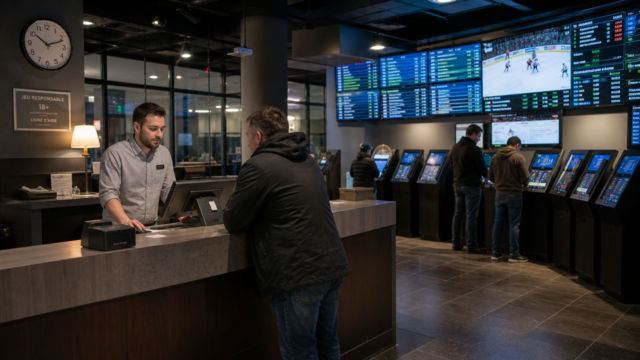
For a Barnaul bookmaker client, the physical office remains the fastest way to withdraw cash winnings on the same day. A typical point sits near Prospekt Lenina or inside a shopping center, with two or three self-service terminals and one cashier window. The minimum single bet at many Russian betting shops starts from 10 rubles, while a first deposit often requires 100 rubles or more.
Online accounts tied to Russian bookmakers still require registration through a regulated payment wallet, but at a ground office a client can place a cash bet after showing a passport and completing a short identity check. This hybrid system works well for older bettors who do not use banking apps and for local events like Altai Krai football matches or national hockey league games involving a team from Omsk.
A Bookmaker in Salavat Follows the Same Federal Structure
Salavat, an industrial city in Bashkortostan with roughly 150,000 residents, has fewer betting locations than Barnaul but the same federal chains. You will not find a standalone international operator on the streets of Salavat because international companies cannot legally open retail offices in Russia. A bookmaker in Salavat is usually a branch of a Russian-licensed chain.
A typical Salavat office contains two self-service terminals and one cashier window, often located near the central bus station or on Ulitsa Lenina. On a hockey evening involving the regional hockey club based 180 kilometers away in Ufa, local offices handle a visible increase in live bets. Cash deposits and same-day payouts keep these small offices relevant despite the growth of mobile apps.
The physical office in a city like Salavat plays a different role than a global digital platform. It provides a legal place to watch matches, check odds on a shared screen, and settle bets with a staff member. That local trust matters more than the speed of a messaging bot for many regular customers.
Cross-Border Scale Runs Into Local Licensing Boundaries
The largest international operators work under dozens of separate national and state licenses. One leading US betting service runs in more than 20 states, another international operator holds permits in Austria and Gibraltar, and a major privately held bookmaker maintains licensed operations in the UK, Malta, Spain, Australia, and several other jurisdictions. No single global license covers retail betting, so each market requires a separate regulatory approval.
Russia follows a stricter model for its ground offices. A legal bookmaker in Barnaul or Salavat must operate under a Russian license, join a self-regulatory organization, and route online payments through the regulated payment system. Offshore sites and messaging services sit outside that structure. The Russian internet regulator maintains a registry of blocked gambling domains, and as soon as one mirror goes offline, messaging channels publish two or three new links.
The gap between global scale and local regulation is widening because digital distribution ignores borders while retail licenses do not. A major operator bought a Serbian betting company in 2023 to expand in the Balkans, and another international group acquired a Polish betting company for £750 million in the same period. Those acquisitions show that even the largest bookmakers in the world still need local ground networks, licenses, and staff to enter a new market. Messaging services may deliver the odds, but a cashier in Salavat still settles the bet.